Saturday, April 23, 2022

Journey to the best cookie ever for easter

    Journey to the best cookie ever for Easter 

        As the festival of April, Easter is a traditional holiday often celebrated by countless people around the world. Ella and I came up with the idea of making cookies for easter. Now, instead of making just a normal cookie, Ella came up with the idea of creating a more healthy and nutritious one by substituting sugar for mealworm powder. Through research, we concluded that mealworm powder also helps the environment in the long run, specifically, climate change. Products that are produced from insects have fewer greenhouse gas emissions and also relatively little ammonia. Greenhouse Gas and Ammonia are major factors of climate change; hence, the bottom line is, that using insect-based food is substantially better in many aspects including health and the environment. 

        The general idea of eating bugs, for instance, mealworms, can be devastating. Even Ella and I were honestly scared. Because we were so scared, we initially decided to add a little bit of powder and a little bit of sugar creating a balanced ratio. However, on the day of our recording, something in our minds gave us a signal that this wasn’t right. If we are making cookies for the environment and setting an example for a group of members to change daily habits, we couldn’t cheat. So instead of balancing the ratio, we substituted mealworm powder with sugar. Our initial thought prior to the baking stage was that the cookie will not be sweet and therefore, a horrible decision. Although the path to the final product of making well-designed easter egg cookies with lovely homemade icing was challenging, the final product was a legitimate cookie that contained sweetness. 

        As an individual who has never baked a cookie before, my praise goes to Ella for being such an amazing teacher. Even though I am very terrible at cooking, I successfully made the mealworm cookie by going step by step. Next Easter, you should join us in the journey of making tasty, nutritious, and environmentally friendly food. 

Video Tutorial: https://www.youtube.com/watch?v=EbvZWhyDydw

Video Creator: Ella Hong

Writer: Sungjoon Choo 


Saturday, April 9, 2022

Earth Hour

Earth Hour

Written by Caleb Paik

Landmarks around the world went dark as the lights were switched off on March 26 for the Earth Hour.

Earth Hour is an hour long worldwide event that is organized by the World Wildlife Fund. This event is held annually, encouraging individuals to turn off electric lights for one hour from 8:30 to 9:30 p.m. on the last Saturday of March. This event aims to raise awareness to the perils of climate change. 

In 2007, the first Earth Hour event was held in Sydney, Australia. Since then, over 190 countries around the globe participated in this event in order to show commitment to the planet. Landmarks such as the London Eye, Colosseum, and the Sydney Opera House all participated in this event by turning off their electric lights. 

Recently, I also participated in this event. On March 26, for an hour, I turned off all the lights and used candles. It was definitely an interesting experience and throughout it all, I was able to learn that climate change really is a drastic issue that many individuals tend to ignore. By writing this report, I hope that we can all spread awareness that climate change should be taken seriously.

My participation of Earth Hour

My participation of Earth Hour

Water Pollution

Water Pollution 

Written by Caleb Paik

Did you know that 70% of industrial waste is dumped into water and 80% of water pollution is caused due to domestic sewage? This report will further tell you more about what water pollution is, and how it affects our world.

What is Water Pollution?
Water pollution is simply the contamination of a body of water caused by substances that propose a threat to natural life. These substances can cause the water to be unusable for drinking, swimming, cleaning and other activities. 

Causes and Effects of Water Pollution
As mentioned before, water pollution can be caused by substances that are toxic to the environment. However, the most common cause of poor water condition is human activity. As we all know, degenerating water quality damages the environment. For example, it can cause the destruction of biodiversity, specifically aquatic ecosystems. This can also lead to the contamination of the food chain, resulting in negative effects to other animals who feed in fish. 

What are some ways to reduce water pollution? 
Soon enough, clean water will become a resource that many people might not have access to. In order to prevent this issue, we must take measures like the following:

- Reduce carbon dioxide emissions to prevent global warming, as well as acidification of the oceans.

- Restrict the use of plastic that end up in rivers, lakes, or oceans.

- Dispose of toxic chemicals properly; Chemicals, such as bleach, that are dumped down the drain or the toilet is a serious cause of water pollution. 

- Water conservation; Clean water is a scarce resource, which is why it is important to lessen water usage as much as possible.

- Minimize the disposal of materials down the toilets.

All in all, water pollution is a serious problems that affects the environment negatively. We must take action in order to reduce water pollution for we are the main cause of it. It is important that we spread awareness to this problem. Help make the world a better place! 

Sunday, March 27, 2022

Eliminating Sanitary Sewer Overflows in New England, United States.

 Eliminating Sanitary Sewer Overflows in New England, United States

 Sangwook Alex Ahn


There are numerous reasons for water contamination and sanitary sewer overflows (SSOs) are one of them. Sanitary sewer overflows are releases of untreated sewage into the environment. They occur when there is an overflow, spill, or release of raw sewage from a sanitary sewer collection system before it reaches a sewage treatment plant. Such releases contaminate the nation's waters, degrade water quality, and expose humans to viruses and other pathogens that can cause serious illnesses.


Sanitary sewer overflows occur due to root, grease, and debris blockages, structural, mechanical, and electrical failures, and extraneous flows that enter separate sanitary sewer systems due to inadequate maintenance. An aging sewer infrastructure also increases the occurrence of the SSOs. Sewer systems in some communities in New England are over 100 years old. As SSOs are a serious problem to public health and the environment, it is an enforcement priority nationwide to identify and eliminate raw sewage discharges. These enforcement actions have resulted in the elimination of millions of gallons of raw sewage discharges and the assessment of significant penalties.


The untreated sewage from overflows can contaminate the waters, causing serious water quality problems and therefore must be controlled. Communities across the United States are working to find cost-effective, long-term approaches to managing their aging wastewater infrastructure and preventing the problems that lead to sanitary sewer overflows.

Saturday, March 26, 2022

Fundraiser for World Water Day

Fundraiser for World Water Day

Written by Seojin David Lee

The majority of us reading this article most likely enjoy the privilege of having access to drinkable water at any moment. Although it may seem normal for us to possess what we believe is a fundamental right to any human being in the 21st century, the harsh reality is that a significant portion of the population worldwide is deprived of the ability to simply drink clean water. This is especially true for the people in the Daknong and Ninh Thuan provinces in Vietnam. 

In light of the annually celebrated World Water Day, the Ecosave club, in collaboration with OpenHands, held a fundraiser on March 20th of 2022 and collected around 600,000 won for the installation of water filtration kits in the Vietnamese provinces by selling colorful Ecosave bracelets and other goods. These water filtration kits are specially designed by OpenHands and go by the name of “WaterKit.” Through our fundraiser, we were able to raise enough money to install around 300 WaterKits and plan the installation to take place in the near future. 

We deeply appreciate the kind hearts who participated in our fundraiser!


Thursday, March 10, 2022

Environmental Sustainability and Online Education

 Environmental Sustainability and Online Education

Sangwook Alex Ahn

Due to the COVID pandemic, online education is prevalent all around the world. Has this online education helped environmental sustainability? In what ways has it helped?


Under the United Nations Framework Convention on Climate Change in 2015 (The Paris Agreement) European nations have committed themselves to keep global warming well below 2°C above pre-industrial levels. For the Netherlands, this means improving energy efficiency by 30% and using energy sources with fewer carbon emissions.


One of these emission sources is student and staff travel. A good strategy to reduce student travel emissions is the use of online education. However, most online education professionals are not aware of the fact that online course delivery can lead to a reduction in the carbon footprint. In addition, there are the challenges that online education puts on the students, such as non-committal behavior of students, underachievement, the ineffectiveness of online communications to learn, and social skills such as presenting, discussion, and collaboration.


Therefore, in order to successfully implement online education as a means to reduce carbon emissions, blended education (blending of online and offline courses) is considered. This demands leadership of professionals, technical and pedagogical support of service departments, development of lecturers, adaptive design of curricula, and an active learning attitude of students. Hopefully, this can be realized to help reduce carbon emissions and contribute to environmental sustainability.


Wednesday, March 9, 2022

Environmental effects of bitcoin


What are the environmental effects of mining Bitcoin?

Written by Sungjoon Choo

As the price of both Bitcoin skyrocketed in the past decade, the question of how these digital currencies are mined is a question that is often asked.

Status Quo

Bitcoin is the cryptocurrency that started the revolution of blockchain. The word blockchain is highlighted as a key tool in future affairs in the current status quo. This would never have happened if bitcoin was never created. For more than a decade, bitcoin has proven to support the universally applauded security system of blockchain. It has not once been attacked since the creation of the coin in 2008. Due to this factor, bitcoin has risen in value by over 12 thousand per cent since 2017.

Mining process

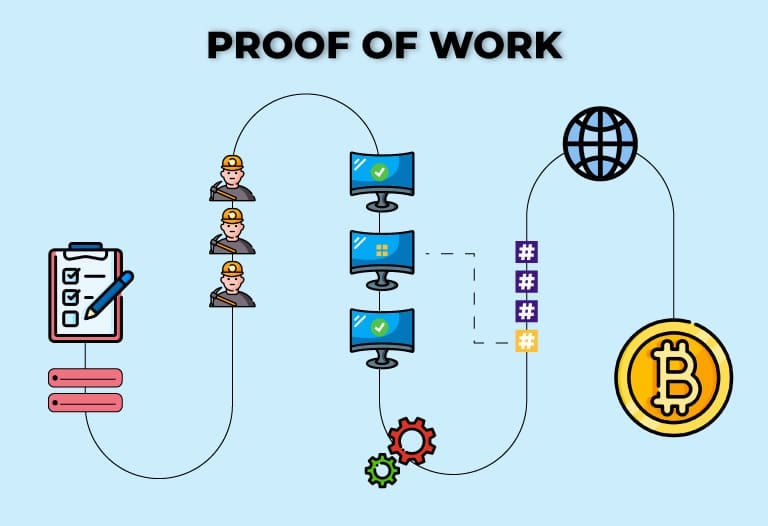
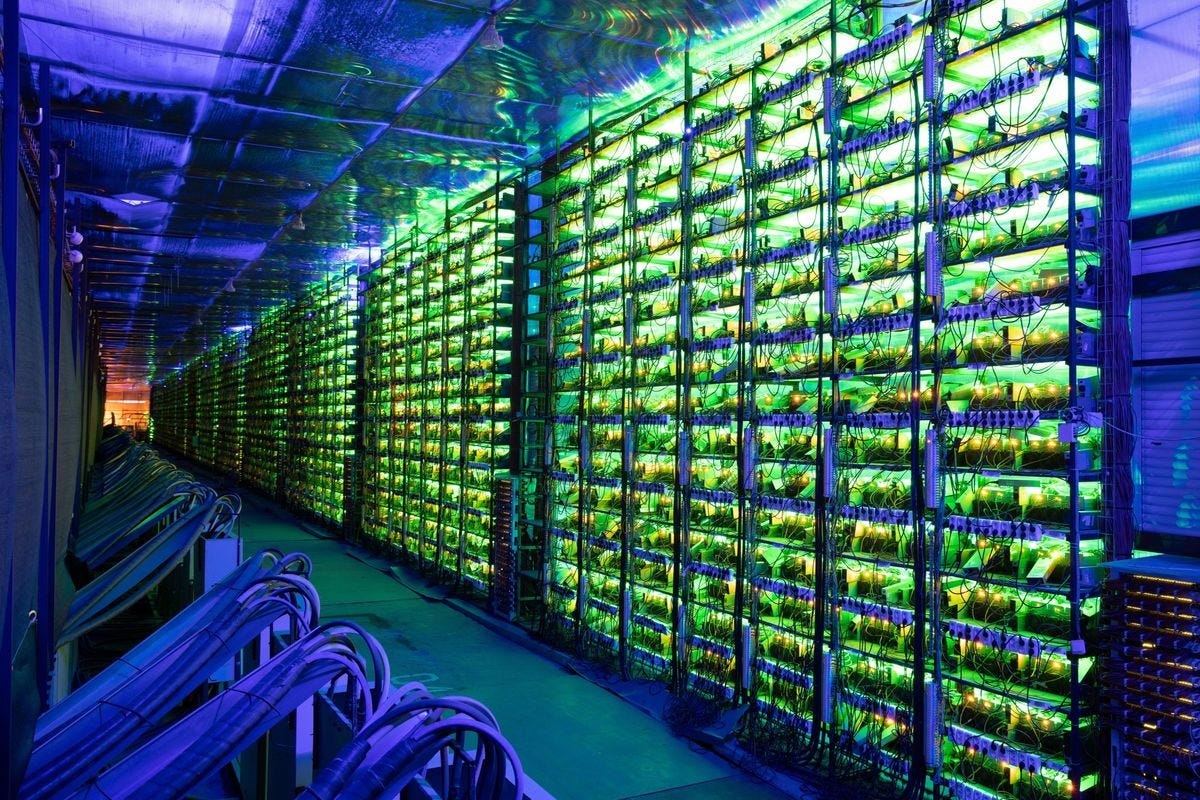
To create bitcoin and sell it to investors, someone must mine them and create the cryptocurrency. In order to do this, the miners go through a process called Proof of Work. This is when supercomputers all compete to solve complex problems in order to get the most information about the block. When person A gives a block to person B, the answers to those problems confirm the transaction and therefore the transaction is successfully passed. The problem is the mining phase of Proof of Work. The miner with more supercomputers gets the advantage of mining the block since the calculations will be solved faster. In other words, the miner to use more energy mines more blocks. Because this competition is so competitive, people stack rows and columns of computers to do computing all day. Generally, this mining process is far outdated compared to Proof of Stake. This mining process is highly advocated since almost all Alt Coin uses this. Even Ethereum is planning to move away from Proof of Work as Ethereum 2.0 is created.

Environmental Impacts

This, unfortunately, leads to environmental impacts such as loads of energy Bitcoin mining sucks up. It approximately uses 91 terawatt-hours of electric energy manually; that is more than the annual electric energy usage of Finland as a whole, which consists of about 5.5 million people. E-waste is perilous to the environment since it causes severe air pollution. This can lead to other macro-environmental pollution such as soil or water. Some reuse the excess energy for their plants. They use the energy from the mine to power the greenhouse, which grows plants.