Thursday, March 10, 2022

Environmental Sustainability and Online Education

 Environmental Sustainability and Online Education

Sangwook Alex Ahn

Due to the COVID pandemic, online education is prevalent all around the world. Has this online education helped environmental sustainability? In what ways has it helped?


Under the United Nations Framework Convention on Climate Change in 2015 (The Paris Agreement) European nations have committed themselves to keep global warming well below 2°C above pre-industrial levels. For the Netherlands, this means improving energy efficiency by 30% and using energy sources with fewer carbon emissions.


One of these emission sources is student and staff travel. A good strategy to reduce student travel emissions is the use of online education. However, most online education professionals are not aware of the fact that online course delivery can lead to a reduction in the carbon footprint. In addition, there are the challenges that online education puts on the students, such as non-committal behavior of students, underachievement, the ineffectiveness of online communications to learn, and social skills such as presenting, discussion, and collaboration.


Therefore, in order to successfully implement online education as a means to reduce carbon emissions, blended education (blending of online and offline courses) is considered. This demands leadership of professionals, technical and pedagogical support of service departments, development of lecturers, adaptive design of curricula, and an active learning attitude of students. Hopefully, this can be realized to help reduce carbon emissions and contribute to environmental sustainability.


Wednesday, March 9, 2022

Environmental effects of bitcoin


What are the environmental effects of mining Bitcoin?

Written by Sungjoon Choo

As the price of both Bitcoin skyrocketed in the past decade, the question of how these digital currencies are mined is a question that is often asked.

Status Quo

Bitcoin is the cryptocurrency that started the revolution of blockchain. The word blockchain is highlighted as a key tool in future affairs in the current status quo. This would never have happened if bitcoin was never created. For more than a decade, bitcoin has proven to support the universally applauded security system of blockchain. It has not once been attacked since the creation of the coin in 2008. Due to this factor, bitcoin has risen in value by over 12 thousand per cent since 2017.

Mining process

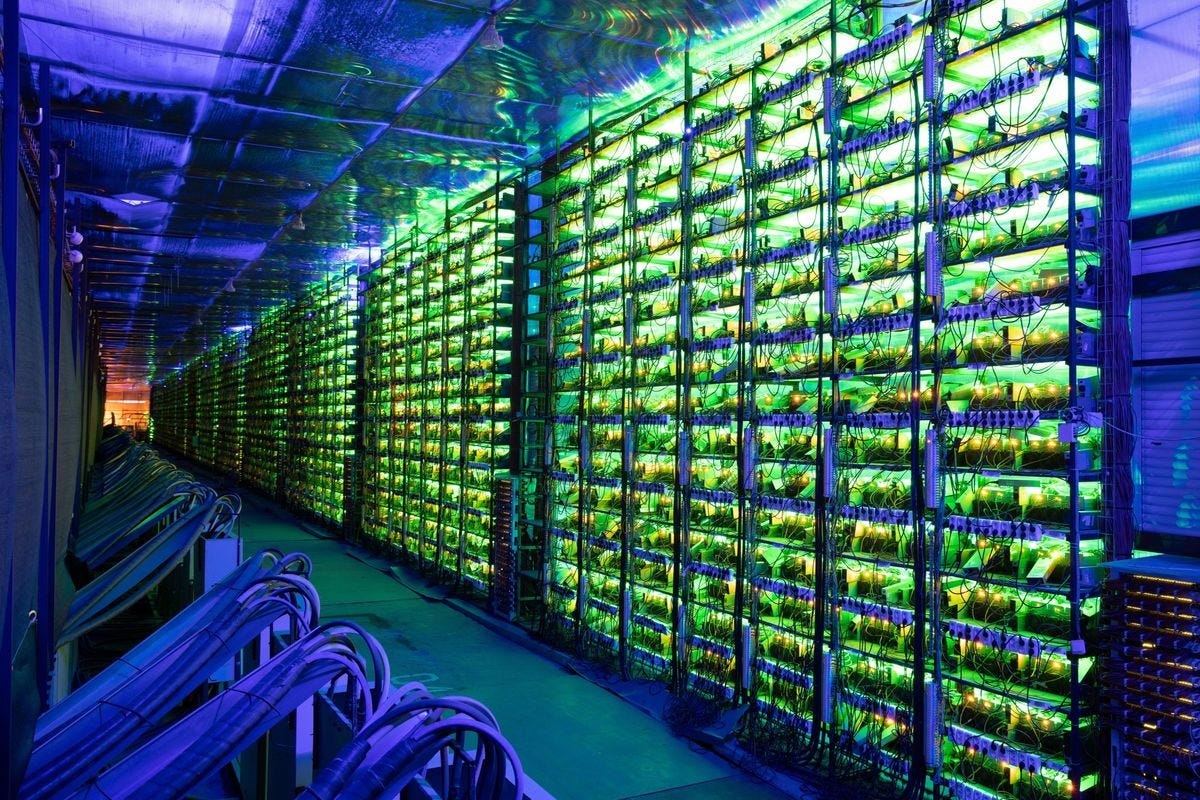
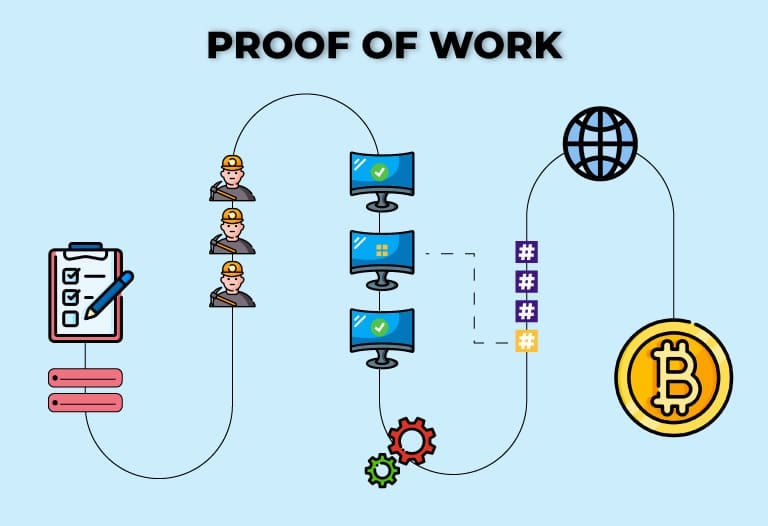
To create bitcoin and sell it to investors, someone must mine them and create the cryptocurrency. In order to do this, the miners go through a process called Proof of Work. This is when supercomputers all compete to solve complex problems in order to get the most information about the block. When person A gives a block to person B, the answers to those problems confirm the transaction and therefore the transaction is successfully passed. The problem is the mining phase of Proof of Work. The miner with more supercomputers gets the advantage of mining the block since the calculations will be solved faster. In other words, the miner to use more energy mines more blocks. Because this competition is so competitive, people stack rows and columns of computers to do computing all day. Generally, this mining process is far outdated compared to Proof of Stake. This mining process is highly advocated since almost all Alt Coin uses this. Even Ethereum is planning to move away from Proof of Work as Ethereum 2.0 is created.

Environmental Impacts

This, unfortunately, leads to environmental impacts such as loads of energy Bitcoin mining sucks up. It approximately uses 91 terawatt-hours of electric energy manually; that is more than the annual electric energy usage of Finland as a whole, which consists of about 5.5 million people. E-waste is perilous to the environment since it causes severe air pollution. This can lead to other macro-environmental pollution such as soil or water. Some reuse the excess energy for their plants. They use the energy from the mine to power the greenhouse, which grows plants.


Sunday, February 27, 2022

Weirs to be removed from Tancheon 


                                                                                         by Grace Hyunjoo Lee


Tancheon, a stream flowing from South of Seoul to join Hangang in the Western part of Seoul, is fettered with weirs built for irrigation for agriculture in the surrounding region, seemingly without enough consideration about their effects.  With rapid urbanization around Tancheon, those weirs are no longer in use; the weirs are hindering the migration of river wildlife and are causing stench due to slow water flow.

Tancheon was selected by the Department of Environment for a pilot project in an effort to restore the ecology of the stream, and 11 weirs are planned to be removed within this year. The stream is expected to regain natural characteristics when the weirs are demolished. When the project is complete, people will be able to visit and enjoy Tancheon in a more natural condition.

I think building dams and weirs is not a bad idea, considering that they are helpful for generation of hydroelectricity, irrigation, and prevention of flood. However, to keep ecological conditions of the streams and rivers as natural as possible, it would be ideal to create dams and weirs that keep the water flow fast and that do not prevent migration of fish.


    ​​“탄천 악취 줄고 맑아진다…탄천 내 '고정보' 철거 본격화.” 한국일보, 9 Feb. 2022, https://www.hankookilbo.com/News/Read/A2022020915220000103?did=DA.

Monday, February 21, 2022

Artificial Rainfall System and Soil Pollution

 Artificial Rainfall System and Soil Pollution

Sangwook Alex Ahn


Soil pollution is a serious challenge that can cause health hazards to people and animals. Human activities such as improper disposal of hazardous and urban waste, industrial processes, mining, military actions, armed conflicts, and unsustainable agricultural practices have left polluted soils worldwide, resulting in environmental damage. Agriculture, mining, transport, and energy generation are sources of soil pollution, with pesticides and chemical fertilizers the most significant contributors of soil contamination.


Most people are aware of the causes of soil pollution listed above. However few people know that artificial rainfall systems can cause soil pollution.


Usually, Silver Iodide (AgI) is used as a condensation nucleus for artificial rainfall, but it can cause serious problems to the ecosystem of soil, freshwater, seawater, and the underground. The evaporation process of moisture in the soil was delayed due to AgI which eventually caused problems in the water cycle of the soil. In addition, AgI reduced the number and types of bacteria in the soil. Soil bacteria are important entities responsible for the production of substances and the circulation of organic matter as decomposers in the soil. The decrease in the number of bacteria by AgI suggests that Agl can cause serious problems to the ecosystem of the soil.


Artificial rainfall is the latest weather control technology that can alleviate the problem of water scarcity. Therefore, there is no doubt that artificial weather control such as artificial rainfall will be used as a tool for environmental improvement in the near future. As AgI can cause problems to the ecosystem of soil, eco-friendly solutions must be used as condensation nuclei and for cloud seeding.


making madeleines using mealworm powder


                            BAKING MADELEINES USING MEALWORM POWDER 

                                              ELLA NAKYO HONG (GRADE 10)


With many people having to quarantine these days, a lot of people found new hobbies that they can do in their homes...and one of them is baking! For our first cooking video in 2022, we tried to switch it up and bake some sweet madeleine cookies that people can easily follow along and bake and gift some to their friends or families. Of course, we used mealworm powder to make the madeleines not only nutritious but also environmentally friendly. 

The gosoae mealworm powder consists of 53% protein and provides nutrients of high value. 
Edible insects don't need as much space in the livestock meaning that it emits lower levels of greenhouse gases, making food that we consume everyday much more eco-friendly. 

By making this entertaining madeleine recipe video, we aim to promote the use of this mealworm powder to slowly spread awareness of the importance of using edible insects as an alternative food source. 


Saturday, February 5, 2022

Climate Change

Climate Change

By Sangwook Ahn

We all hear about the seriousness of climate change. How serious is it? The past seven years have been the hottest on record! According to new data from the EU's satellite system, Europe lived through its warmest summer, and temperature records in the Western US and Canada were broken by several degrees. Extreme wildfires in July and August burned down towns and killed hundreds of people.

Governments around the world are committed to limiting global temperature rise to 1.5 °C to curb climate change. However, time is running out. The concentration of Carbon Dioxide and methane in the atmosphere increased to reach an unprecedented level. 

We need to change our ways. We have to take steps toward a sustainable society before it is too late. 


https://www.instagram.com/p/CYjwNKdI3rw/?utm_medium=copy_link

Friday, February 4, 2022

Climate Change and the World of Sports

Climate Change and the World of Sports

Sangwook Alex Ahn


Climate change touches every aspect of human life and global sports are no exception. Natural disasters, wildfires, typhoons, rising temperatures, and severe weather are disrupting sports events all around the world. Both competitive and recreational athletes’ ability to participate in many sports is affected in impacting people of all ages and backgrounds.


Shortening the winter season poses a substantial threat to snow sports. Beach volleyball courts in southern California are disappearing due to rising tides. Smoke from bush fires disrupted the Australia Open in Tennis. The Tokyo Olympics, the hottest summer Olympics ever, had to move the marathon outside the city because of the high temperature and the tennis games were played at night.


Global professional sports are threatened because of the rising heat, excessive floods, droughts, extreme weather, and sea level rises. In 2019 the Rugby World Cup, 3 rugby games were canceled because of the typhoon. In 2020 the wildfires in Australia caused the cancellation of the cricket and tennis games because the courts were filled with smoke. The possible host city for the next men’s football world games in Seattle may not be able to hold the games in the 43 °C weather.


However, global sports aren’t just the victim but also the cause of the problem. They are also a contributor to climate change. Although no one has done a full carbon edit of global sports, it generates approximately 0.6% of global carbon emissions. The sportswear industry is the source of considerable emissions and transport generated is also a serious contributor to the carbon footprint.


Then what radical changes must be made to global sports? In addition to urging sporting institutions to be carbon zero in the next decade, the global sportswear industry must be more transparent about the carbon it produces and make a similar next zero commitment. Also, fossil fuel sponsorship in global sports should end.


Above all, people should start having conversations about the future of sports and the role they can play in reducing their carbon footprint. “Sports has the power to reach a large number of people who aren’t listing to scientists or politicians.” Sports can be a powerful tool in climate politics.