Sunday, August 17, 2014

Overfishing

   Currently, one of the biggest issues on earth is overfishing. Most people on earth rely on the ocean for their daily live hoods. It is also a primary source of our protein. So marine creatures provide us protein and food to live our lives everyday. However, people overfish due to the lack of management and carelessness.
 
   First of all, overfishing is the act of fishing too much that the fish cannot sustain their population. The thing that is causing over fishing is that our fishing fleets are two or three times bigger than it should be. Reason that overfishing is such a big threat to us is because we are losing  species as well as our whole ecosystem. In addition, we are losing our precious food source.
 
   Overfishing is also a huge problem because there is a huge imbalance in the marine life. There will not be enough breeds, which will decrease the amount of fish in the ocean. Overfishing doesn’t only kill the fish that are targeted for food but also other sea animals as well. For example, dolphins or sea birds have been caught in the fishing gear and got killed. Most of them are when they are catching shrimp. So for every one kilogram of shrimp, up to nine kilograms of other marine animals are caught. In the last 60 years, the fish stocks as fallen by 90% due to overfishing. The scientist says that we are facing the collapse of all types of fish. In 2008, fishing limits where defined for the highly prized blue fin tuna. The scientists recommended a fishing limit of 10,000 tons. However, they ended up catching 60,000 tons of tuna, which is 6 times more than the scientists’ limit. So the amount of fish in the ocean is decreasing at a very fast rate due to overfishing.

   We should try our best to prevent it from happening. How we can do this is that our politicians have the responsibility to make the decisions. We citizens have the rights to persuade them to make these decisions happen.

The video below descriptively tells us why overfishing is such a big problem and how it is affecting our lives today. 
  

       Video: Ending Overfishing from OCEAN2012 on Vimeo

Thursday, August 14, 2014

In the past few days, heavy rain has caused flash flooding and structural damage here in the North-Eastern corner of the United States. The storm system, that has also been responsible for the unusually destructive weather in the Mid-West, has both wreaked havoc and confused inhabitants. Heavy rains aren’t usually supposed to come in the early fall when the air is dry. The 14-year long drought of the Colorado River Basin has likely amplified the effects of the storm.


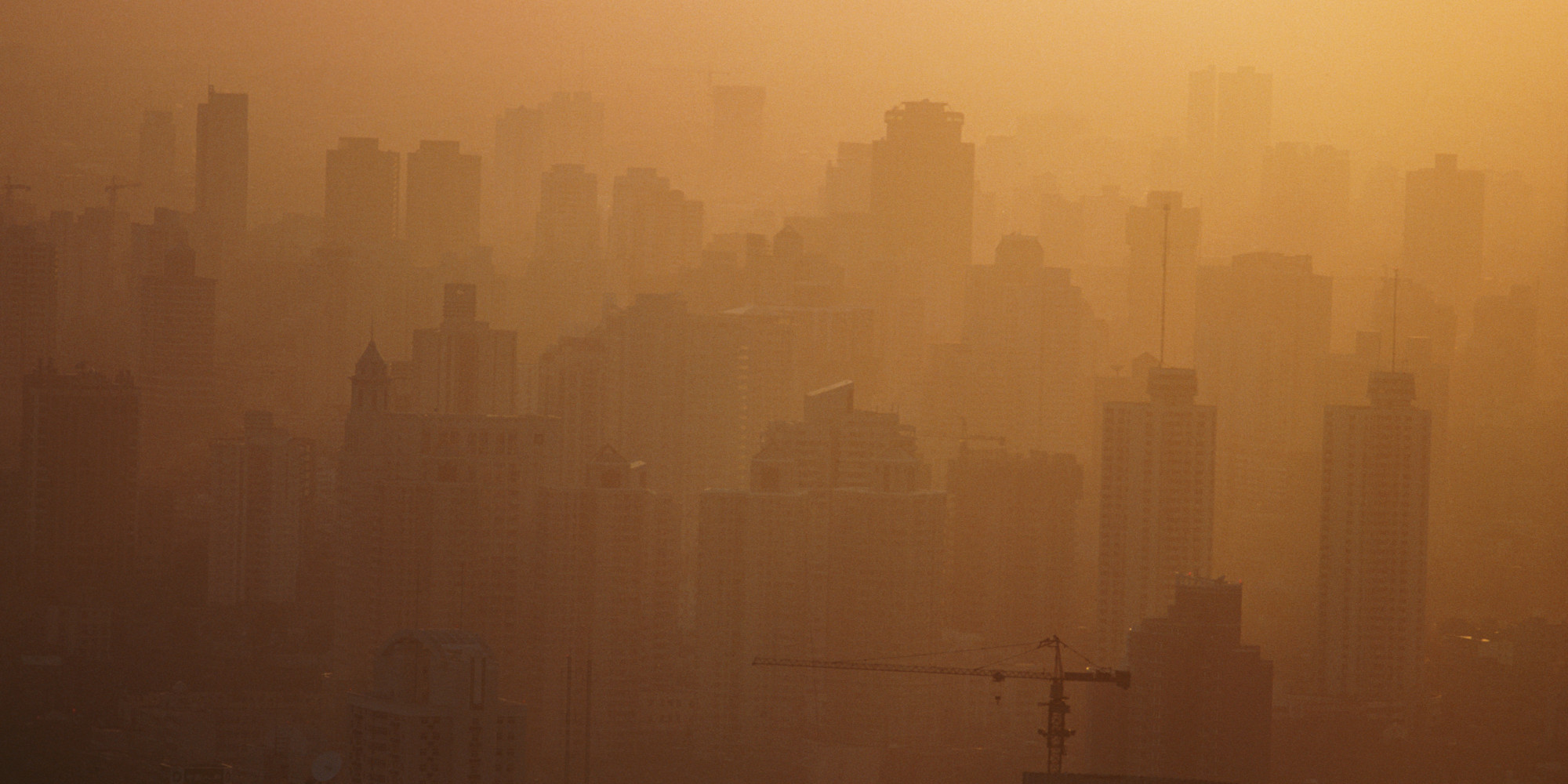
Why do such weather abnormalities occur with increasing frequency? One article from National Geographic blames greenhouse gases and aerosol emissions. Most notably, the study, carried out by various research groups in the US and China, pointed out that aerosol emissions from rapidly growing economies in Asia are a major factor that contribute to the worsening severity of storms. Sulfate, for example, is released into the air from burning coal and, once in the air, allows more water droplets to form within clouds by increasing the surface area droplets can form on. As a result, we see larger storm clouds and heavier rains. Realizing that the economic activities of a developing nation can affect countries around the world may be key to reducing air emissions.

Tuesday, May 6, 2014

Hawaii, the Green Island

I have talked about the green efforts of Jeju Island, the biggest island of S.Korea, in E-gen couple of times. Today, I would like to introduce the biggest island of the U.S., Hawaii's green efforts to reduce the carbon foot prints.

Hawaii has proclaimed that the islands will reach 40 percent renewable power by 2030. Not just that, the islands have tripled renewable energy capacity since 2005, while leading in creating renewable jobs. Most new homes in Hawaii have solar water heaters as well.

The Hawaii's renewable energy sources are from Sun, Wind, Sea and Land. 

The Sun's plentiful heat and light provide great source of energy. The most applicable sun related technologies adopted in the Hawaiian islands are photovoltaic systems, solar hot water and passive solar design and daylighting. These technologies have applied to homes and commercial buildings which result in huge savings in operation cost.

Wind plays an important role in reaching the goal of 70% clean energy in Hawaii. Hawaiians say they have endless wind supply. Lanai and Molokai islands have the best wind levels in the country, and wind is available 40% of time there. Among the many benefits the wind energy can give, a lower impact of wind turbines on birds and other wildlife sets importance in the islands.

Geothermal energy excavation had not started until 1960's. However, since its first drilling, geothermal energy makes up 20% of Hawaii's big island energy consumption. 

Hawaii also explores the use of biomass energy from variety of sources. H-Power(Honolulu Project of Waste Energy Recovery), the city and county of Honolulu's "garbage to energy" plant burns refuse-derived fuel to provide electricity. Kaunai and Maui islands' sugar plantations produce biomass fuel for automobiles which is made from ethanol by sugarcane molasses mixing with gasoline.

Today, the state Public utilities commission announced four rulings which push Hawaiian electric companies to reduce electricity costs and generate vast amount of renewable energy.

While the states in mainland are struggling and fighting to reduce carbon foot prints, Hawaii moves ahead in executing green bills and applying green systems.

Image: Google image
Source: Hawaii govt. projects, U.S. Department of Energy, etc.


hawaii

"Do we have a good plan to fight climate change that's as good as the plan we had for HIV?"

Jim Yong Kim, the former president of Dartmouth college and current leader of the World bank had an interview with the Guardian. 

In the interview, he said that battles over water and food will erupt within the next five to ten years as a result of climate change.  He urged scientists to join together to come up with a solution to fight the climate change as activists and scientists did for 15 years to develop a treatment for HIV.
He threw a question to the climate change community, " Do we have a plan that's as good as the plan we had for HIV? " The answer is no at current unfortunately.

President Kim mentioned that there was not enough basic science research going into renewable energy. There have not been ways of taking discoveries made in universities and quickly moving them into industry. There have not been ways to test innovative ideas. He added that the climate change community kept saying what he meant by a plan. His answer was a plan that is equal to the challenge and will convince anyone that climate change community are really serious about the issue.

President kim said that there were four fields that the World bank could help specifically regarding the fight against the global warming: Finding a stable price for carbon, removing fuel subsidies, investing in cleaner cities and developing climate-smart agriculture. 

He also predicted that since the water issue was critically related to climate change and carbon is the currency of climate change, fights over water and food would be the most significant direct impacts of climate change in the next five to ten years.

His interview with the Guardian reflects general people's disappointment over the climate change community's results over treating the issue. Though people are really committed on the issue, the slow change and the cooperation among the scientists overall lead the kind of interview the World bank president gave to the british paper.

I hope his challenge and urge to the climate change community will refresh people's commitment over the issue and also remind ordinary people how the danger is close and imminent.

Image: Google image
Source: the Guardian, the climate change project, youtube etc.


world bank president

Wednesday, April 30, 2014

Jim Yong Kim: You can't lift people out of poverty without growth, Interview with the Guardian

Jim Yong Kim, the World Bank president, talks to Guardian economics editor Larry Elliott about Kim's days as a demonstrator against the bank. Kim shares the bank's priorities on climate change and clean growth, and gender equality, and discusses the prospect of a Brics (Brazil, Russia, India, China, South Africa) bank to help meet massive infrastructure needs in middle-income countries.

Monday, April 7, 2014

Dolphin Deaths in Marine Parks and Aquariums

    Marine-mammal facilities are one of the most successful part of a industry built on the suffering of intelligent animals that are being extremely mistreated. In the wide ocean, social groups of dolphins swim up to 100 miles a day. However, in marines and aquariums, the dolphins only get to swim in small circles which make them unable to engage their natural behaviour. In marines, the dolphins are forced to perform tricks just to get food and they are usually torn apart from their family which gives them a lot of stress. The unbearable stress weakens the dolphin's immune system which causes them to die a lot earlier.

    First of all, the dolphins being torn apart from their families is a very stressful thing for them and can be unresistable. Hundreds of wild dolphins have been taken from the U.S. waters and have been placed in aquariums or marine parks. Even though the U.S. parks or zoos haven't taken the dolphins from the oceans since 1993, it is still allowed. Other countries have been consistently taking the animals from the wild and placing them in aquariums or parks which causes them to be torn up with their families pretty often. Capturing or taking even one of the dolphins can hugely affect the entire pod because in the wild, the female dolphins spend their whole lives with their mothers and sisters. If they get torn apart from the ones that they spent their whole life together with, that would be extremely difficult for them to bear. These days, they surround the dolphins with nets to track pods just so they can obtain a female dolphin of breeding age. The net pulls them up and unwanted dolphins are just thrown back into the water which can cause the families to separate very easily. Some of the dolphins die due to stress and some of them get pneumonia when water enter their lungs through their blowholes. So separating the dolphins from their families can cause a lot of stress and can often lead to death as well.

    In addition to the cruelty of taking wild dolphins from their natural habitats and separating them from their family, they keep dolphins in captivity. This dooms them to living their life as attractions at aquariums or theme parks around the world. They are forced to perform tricks in front of huge crowds and screaming people which gives the dolphins a big amount of stress. They are also forced to swim with tourists and are often hand fed or petted by the tourists. The biggest problem is that they are forced to swim in tiny, barren concrete tanks. The dolphins navigate by echolocation but in the tanks, the reverberations bounces of the walls which drives some of them insane. For the dolphins, keeping them in tanks are basically keeping a blindfolded person in a jail cell. The trainers for the dolphins often force them to perform tricks by taking away their food or isolating animals that don't perform tricks. A marine-mammal behavioural biologist in Seattle says that captive dolphins demonstrated a lot of stress related behaviours such as self-inflicted trauma, induced vomiting, and aggressiveness. Some captive dolphins took their own lives by banging their heads against the walls or by refusing to come out of the water. This is because of their stress and frustration being captive.

Image : Google Image
Whaling in Japan (the final ruling from ICJ)

On 31 March 2014, ICJ ruled that Japan's Whaling directly violates the "International Convention for the Regulation of Whaling" whihch was initially raised by Australian government in June, 2013.
And ICJ ordered the accused group to stop Whaling.  In the process, ICJ also identified that Japan's Whaling was carried out for commercial rather scientific research purpose. As a result, a large amount of Whales were killed for wrong reason.
Japanese government was very disappointed about the ruling, but they have decided to comply with the results.

Source : Yonhap News, Media Pen, Google etc.
Image : Google Image