Monday, March 27, 2017

Earth Hour In My Place (8:30~9:30pm 25MAR2017)

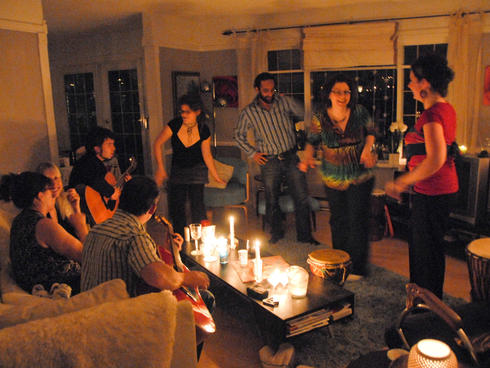
 I turned off the lights and spent time with candle for an hour to be part of Earth Hour 2017!!


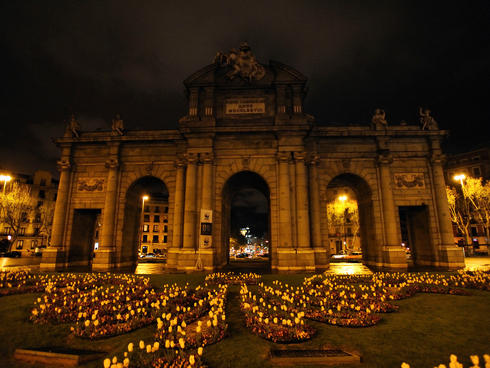
*Korea's Landmarks participated in Earth Hour
1. Heunginjimun Gate, Seoul
2. Sungnyemun Gate, Seoul
3. Namsan Tower, Seoul
4. Seoul City Hall, Seoul
5. KT Gwanghwamun Company Building, Seoul
6. Suwon Hwaseong, Suwon
7. Jeondong Catholic Church, Jeonju
8. Busan Tower, Busan
9. Busan City Hall, Busan
10. Busan Port Bridge, Busan
11. Busan Cinema Center, Busan


By Justin Chung

Tuesday, March 21, 2017

Earth Hour 2017

Earth Hour 2017: 8 things to do in the dark

Earth Hour 2017

Be a part of Earth Hour 2017. Turn out your lights on Saturday, March 25 at 8:30pm and show your commitment to a better future.
Switching off the lights for Earth Hour 2017 means showing your commitment to the planet—and switching on the fun at home.
Join hundreds of millions of people around the world in our collective fight against climate change. Your commitment to the planet helps to create far-reaching environmental and social impact. There's never been a more timely and important moment for the world to stand in solidarity for the protection of our planet.
This year, Earth Hour takes place at 8:30 p.m. local time on March 25. 
We know even small actions at home can help the planet at large. So consider the lights-out hour as an opportunity to enjoy quality time with family and friends and celebrate your role in this global movement.
Here are a few ideas for fun things you can do during Earth Hour:
1. Turn up the dark! Hold an unplugged concert and stream it live.
Music has the ability to inspire and ignite meaningful action. During Earth Hour, go live on your Facebook page or other live channel and share your original performance in the climate movement using #EarthHourLive.
2. Work up a sweat! Raise your heart rate with a candlelight session of your favorite workout.
Gather your friends for a candlelight workout and burn some calories along with those candles. In your down time, think on ways you can bring your commitment to climate action beyond Earth Hour.
3. Make a sign for the People’s Climate March on April 29th or the next rally of your choice.
Momentum is on our side. The world is looking toward a renewable future and there’s never been a more critical moment to show solidarity. Use your Earth Hour to create a sign to show your commitment to fighting climate change every day.

4. Take in the sights! Spot the landmarks around you that are participating in Earth Hour.
Hundreds of the world’s most iconic landmarks, from the Empire State Building, to the Eiffel Tower and the Sydney Opera House participate in Earth Hour. This year, take a walk around your town or city and try to see which buildings switched off their lights for the planet.
5. Create your masterpiece! Make art in the dark.
Unleash your inner artist and use Earth Hour to try your hand at creating in the dark. From painting your friend’s face as their favorite animal, to drawing images of the wildlife and nature you love, have a wow or a laugh when you turn back on the lights.

6. Host a dinner party for family and friends!
Invite your loved ones over for a potluck dinner to be enjoyed by candlelight. Consider asking people make sustainably sourced dishes to share and encourage everyone to take home leftovers to reduce food waste.

7. Look at the stars! 
Study up on the cosmos and then venture out to a dark, open spot near your home. See which constellations you can pick out in the night sky, and maybe even glimpse a shooting star!
8. Make a resolution! Commit to reducing your carbon footprint.
March 25 is as good a day as any to make a resolution to reduce your carbon footprint. Turn off the lights when leaving the room for 15 minutes or more, or switch to e-billing to save paper. Pick any one (or all) of these simple tips to help conserve the environment.


http://www.wwfkorea.or.kr

Friday, February 24, 2017

4th Ecosave Workshop - Endangered Animals

 We held the fourth workshop where we informed and taught kids about endangered animals. Although this was a topic that was introduced earlier, kids showed a significant interest in the matter so we decided to highlight few more endangered animals that were under recent spotlight such as polar bear, panda, and local Korean dolphins called 'Sangkengyi'. Growing Sangkengyi was found caught in fishing net and marine authorities decided to take meausres to preserve the species.

Due to school-related reasons only limited number of children were able to attend the workshop. However, small gathering allowed us to have more personal conversation with kids and offered them the opportunity to capture in-depth knowledge in a quiet setting.

We started off by sharing presentations on new endangered animals. We talked about each  animal's characteristics, habitats, and why it was endangered. Later on, the kids got into small groups and created their own presentations on endangered animals just like the previous workshop. All of this was proceeded in a slower and more laid back manner since it was like a review session.
And the end, the kids presented the slides and the group with the best presentation was rewarded special prizes.  We wrapped up by giving out goody bags to everyone.

Even though many kids could not attend due to school matters, we believe this was another successful workshop where we got the chance to elaborate on the topic of endangered animals and refresh their past memory with the attened children.


By Justin Chung

Friday, January 27, 2017

My game with Scratch

Our purpose of creating these fun, simple games was to familiarize children with the concept of edible insects. Each member used a program called "Scratch" to create a game that involved edible insects.

Here is a link to my game: https://scratch.mit.edu/projects/119305455/

"Insect Eater" created by Daniel Kim

Posted by Daniel Kim

Sunday, December 4, 2016

Asian consumer firms need to buck up on sustainability: New report

http://www.eco-business.com/news/asian-consumer-firms-need-to-buck-up-on-sustainability-new-report/?utm_medium=email&utm_campaign=April%2020%20newsletter&utm_content=April%2020%20newsletter+Version+A+CID_900b2679fb4f0ef3073e4553c5a04231&utm_source=Campaign%20Monitor

Posted by Daniel Kim

Monday, November 21, 2016

The Great Barrier Reef

Australia’s great natural world. The largest living thing on Earth. Visible from space. These phrases depict the one and only Great Barrier Reef of Australia. The Great Barrier Reef is the world’s largest coral reef and one of the seven wonders of the world. It is 1,400 miles long, contains 2,900 individual reefs, and is home to thousands of different species. Some examples are fish, mollusks, birds, whales and dolphins, and turtles. The reef provides life to many species, and if it were lost, the surrounding ecosystem would be negatively impacted to a great extent. 

However, it seems like the nightmare has become true. Last month, it was recorded that “The Great Barrier Reef of Australia passed away in 2016 after a long illness. It was 25 million years old.” The reef’s greatest enemy, bleaching, has caused tremendous amounts of destruction to the reef. Coral bleaching is when stress on the environment causes a disruption between the relationship between the tissues of corals and microscopic algae. This causes corals to turn white and lose its beautiful color. Several factors cause coral bleaching such as temperature change, runoff and pollution, overexposure to sunlight, and extreme low tides. Last May, researchers reported that more than a third of the northern reefs was dead and that 93% of individual reefs was affected. Since then, situations have worsened greatly; hence, the devastating news of the Great Barrier Reef. 

Despite how the Great Barrier Reef was declared dead by several, many have opposed this statement. Researchers and scientists say that the reef is not quite dead, but it is dying. Therefore, there is still hope in preserving it. According to CNN, in the past, the Australian government had pressured the United Nations to take the Great Barrier Reef off the climate change list, but after the major change, the most precise measurements are taking place. It is no doubt that the reef is in a grave state. However, it is not completely dead yet, and we can all strive to preserve what is still left. 


By: Soo Lee

Saturday, November 5, 2016

Namsan Tower Lights

    Everyday, when the sun sets, the Namsan Tower always lights up in a certain color. These colors may vary from yellow, green, red, etc. However, did you ever stop to wonder what these colors meant?

    These wide array of colors all actually represent the air quality or dust level in the air. Depending on the amount of dust that day, the color of the tower will change. When the tower gives off a blue light, it signifies that the dust level in the air is very low. Usually, the dust level goes from 0-30 micrograms. Next, when the dust level is between 31 and 80 micrograms, the tower tends to illuminate in a greenish color. This means that the air quality for the day is average. An average air quality can sometimes come in colors of yellow and purple as well. Lastly, when the tower is red, it is giving a sign that the air quality is horrendous. This happens when the dust level exceeds 120 micrograms. The colors not only adds a cool feature to the beautiful tower, but it can also be utilized to inform people about the air quality. So when the tower is red, it would probably be best not to step outside. 


By: Justin Chung